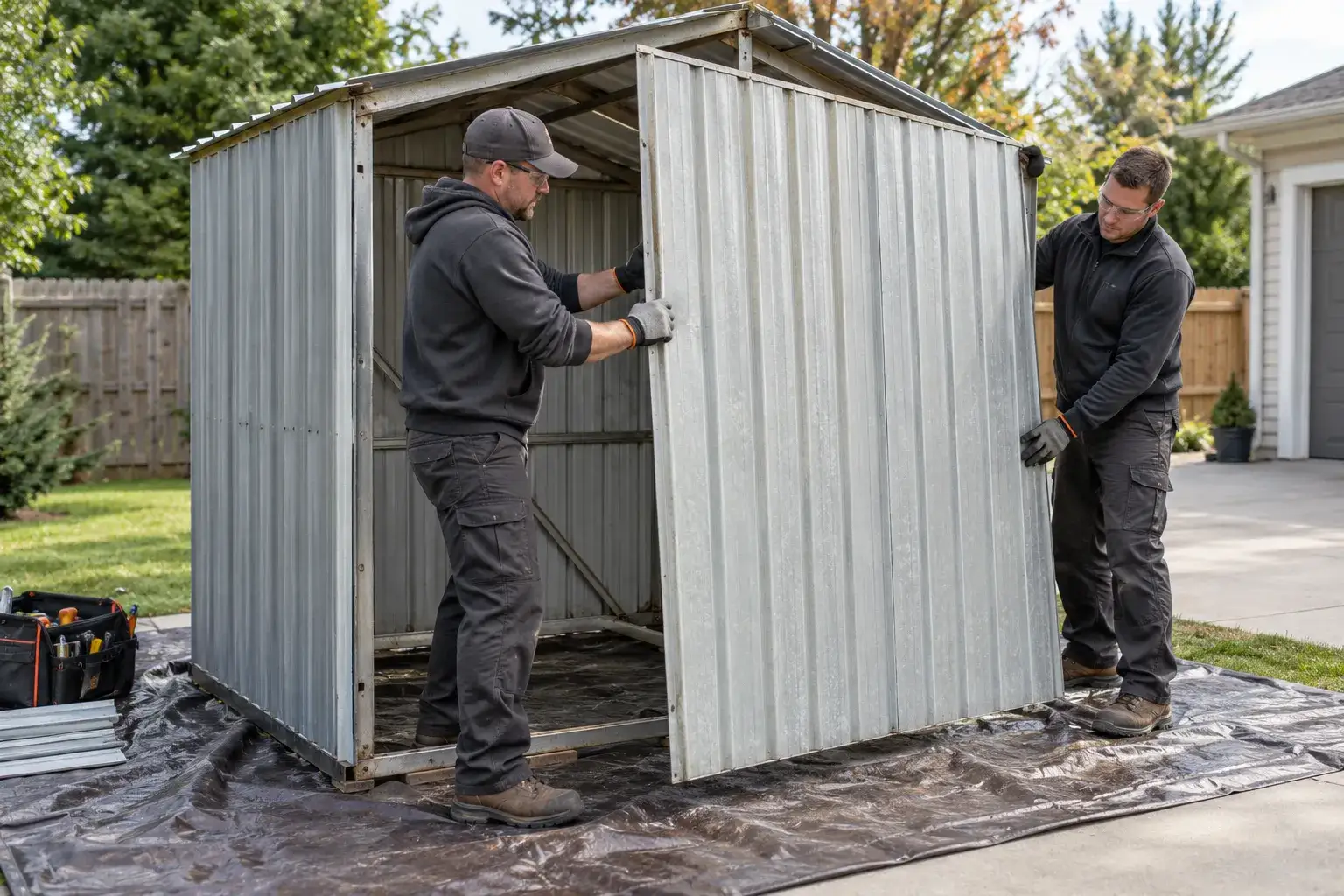
A light-gauge metal shed can become unstable once roof or wall fasteners come out. Large panels also catch wind and develop sharp edges. Preparation should make the site visible without loosening the structure.
Before the crew arrives
- Remove personal property and separate chemicals, fuels, batteries, and cylinders.
- Photograph the roof, each wall, the interior frame, and the base.
- Identify ground stakes, concrete anchors, skids, or perimeter rails.
- Note electricity, lighting, buried lines, and any connection to another structure.
- Measure the gate, side yard, turns, and distance to the loading point.
Leave the structure intact
Do not pre-loosen roof sheets or wall panels. The remaining fasteners may be holding the frame square. A removal plan should control one panel at a time and account for panel size, wind, corrosion, and safe stacking.
Ask how mixed parts are handled
Metal sheds may still contain wood floors, plastic trim, sealants, glass, roofing, and electrical parts. Confirm which parts are included in hauling and which require another disposal path.
The useful next step is a photo-based scope that covers stability, anchors, utilities, access, dismantling, and the receiving plan.
Use the service page to frame your request
The metal shed removal page lists inclusions, exclusions, preparation, and estimate factors. Then use the estimate checklist before calling.