Describe the structure
Share dimensions, materials, condition, base, and what remains inside.
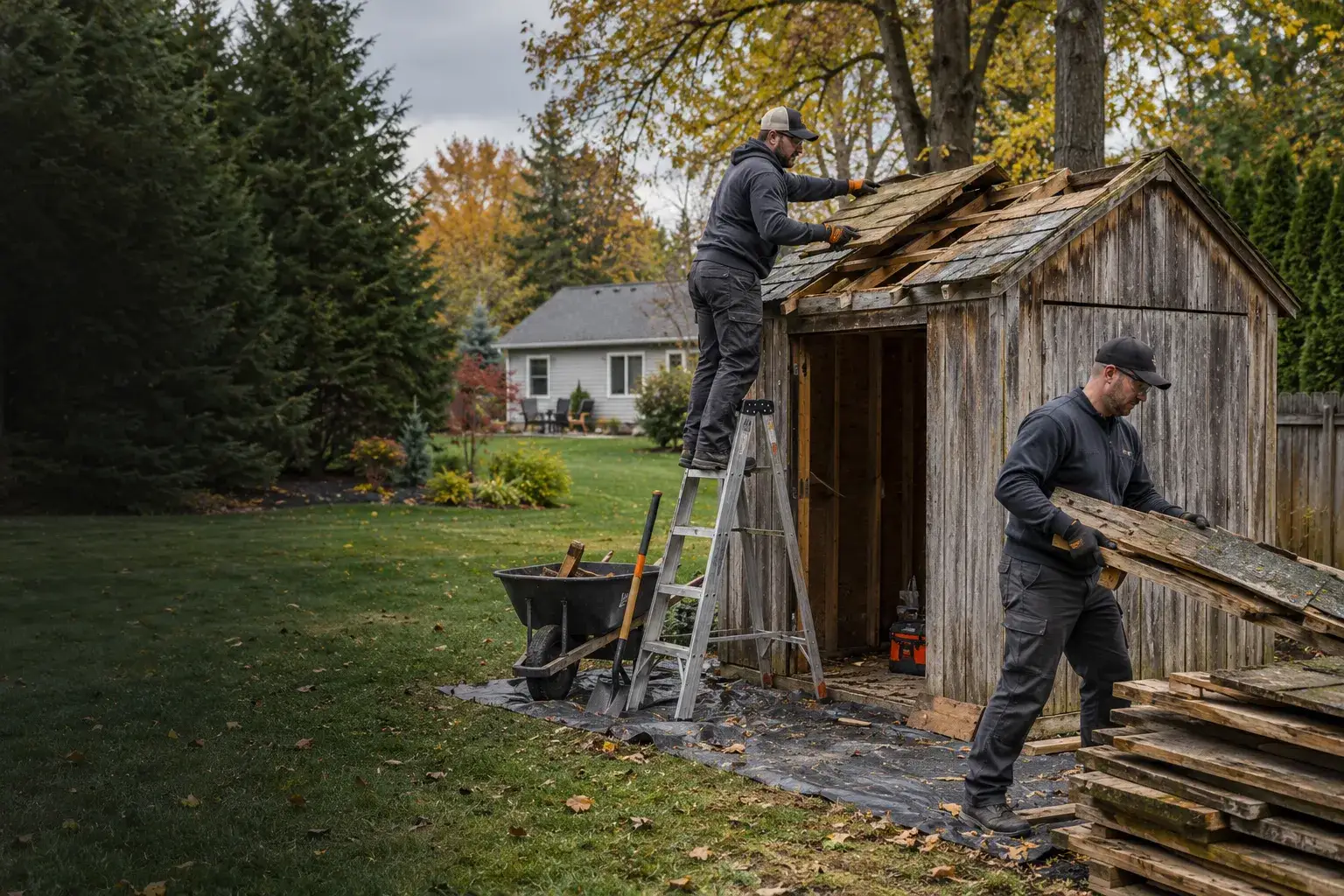
For Greenleaf, Wisconsin, HaulNation Shed Removal focuses on the details that shape a useful estimate: structure, base, contents, access, dismantling, and haul-away.
Footprint
Length × width × wall height
Material
Wood, metal, resin, or mixed
Base
Skids, blocks, anchors, or slab
Access
Gate, grade, distance, and turns
Two sheds with the same footprint can require different plans. Roofing, rot, anchors, concrete, remaining contents, and a narrow carry path all affect the scope.
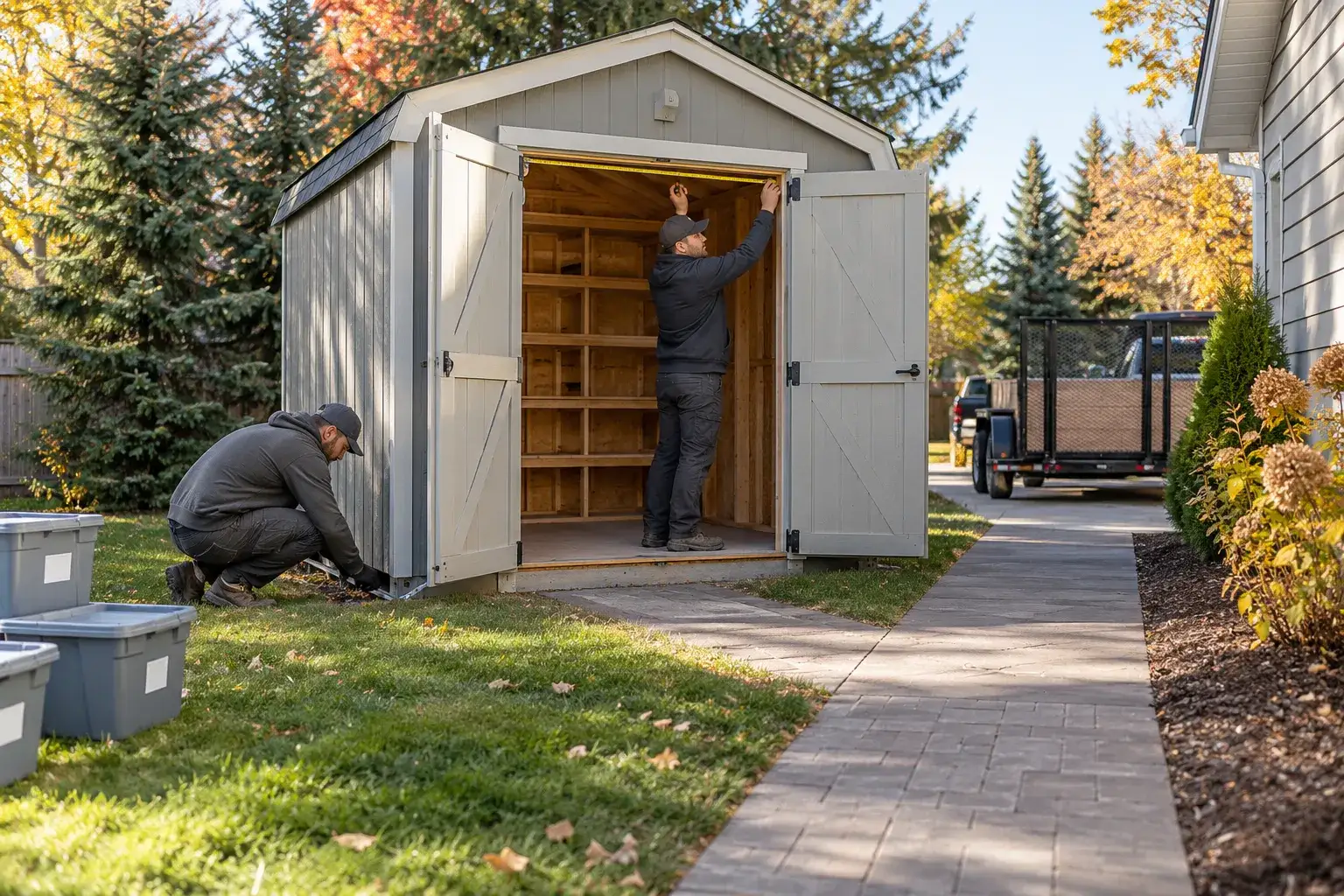
Each service page explains inclusions, exclusions, preparation, and the details that affect an estimate.
Share dimensions, materials, condition, base, and what remains inside.
Photograph gates, turns, grade, steps, surfaces, and the loading area.
Identify utilities, suspect materials, chemicals, and foundation work before scheduling.
Review dismantling, contents, hauling, fees, exclusions, and the condition expected at finish.
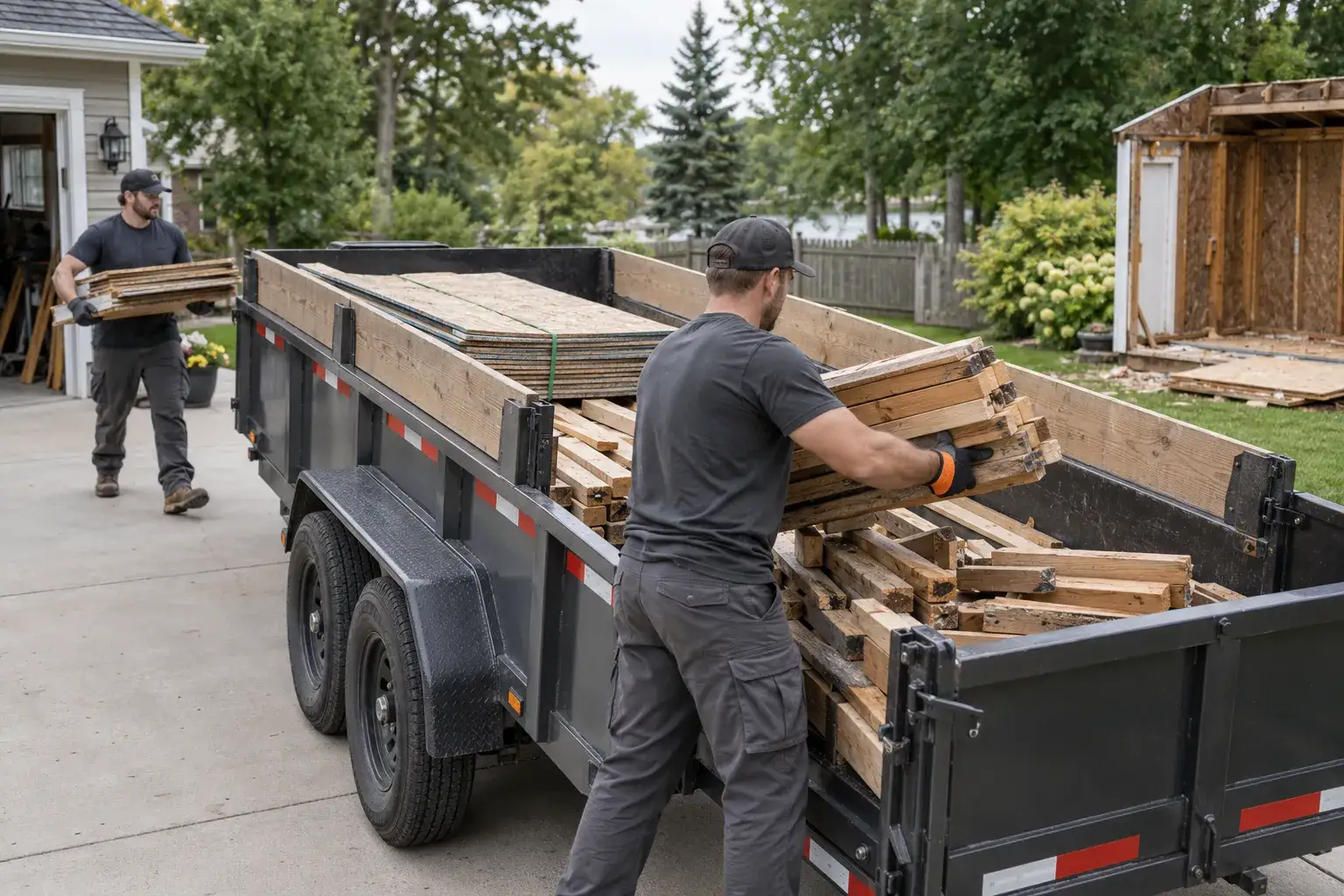
Municipal bulk collection may exclude demolition material. Confirm what leaves, who loads it, and how receiving fees are handled.
Read about shed haulingUse these pages to prepare the measurements, access notes, and local disposal questions tied to your property.
Emptying personal property usually makes the structure easier to inspect and keeps chemicals, fuels, tools, and household items out of a mixed debris scope. Contents can be discussed separately.
Not automatically. Skids, blocks, anchors, footings, pavers, and concrete all require different work. The written estimate should say what remains.
Photograph every side, the roof from ground level, the interior, the base, and the entire route to the driveway.
Have your measurements, photos, access notes, and questions ready.