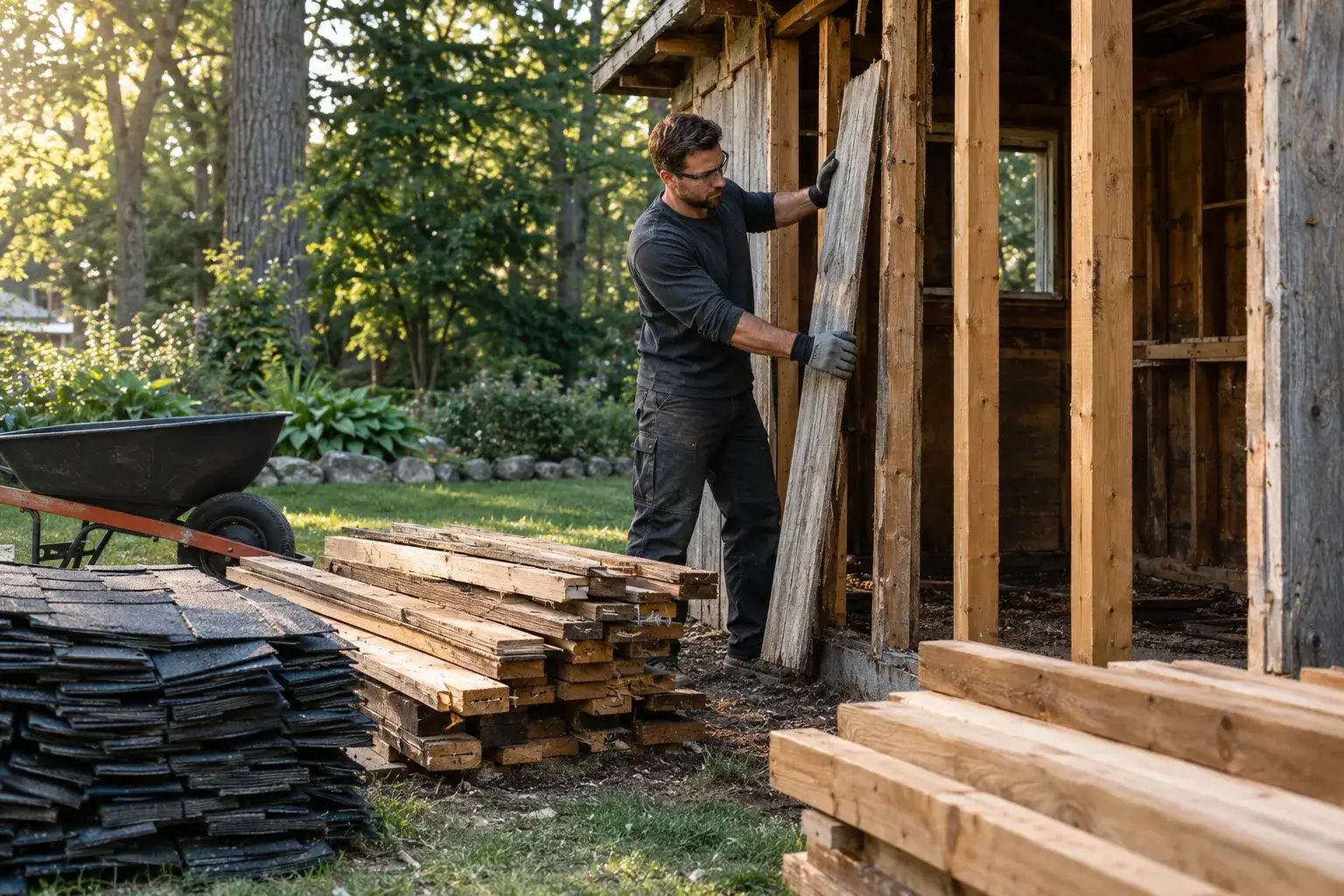
Age alone does not tell you what a shed contains. Repairs and additions may have introduced different roofing, siding, floor tile, insulation, coatings, or electrical components over time. Treat unknown material as a question, not as ordinary debris.
Photograph before disturbing
Take clear photos of roofing layers, siding, interior panels, flooring, pipe or wire entries, labels, and stored containers. Do not sand, drill, saw, or break a sample for identification. A qualified inspector or contractor can say whether testing is appropriate.
Materials to flag in the estimate
- Old cement-like sheets, panels, or roofing products.
- Peeling or heavily weathered paint on wood or metal.
- Unknown insulation, floor tile, or adhesive.
- Mercury switches, fluorescent lamps, or old electrical gear.
- Fuel, oil, pesticides, paint, batteries, and pressurized cylinders.
Wisconsin DNR guidance describes special handling and disposal paths for asbestos-containing material, lead-painted components, mercury devices, refrigerants, and hazardous waste. The exact requirement depends on the material and the type of property.
Keep the scope in writing
The estimate should state whether testing is complete, what material is included, who handles excluded items, and where demolition debris will go. If a specialist must work first, schedule that step before the shed removal date.
Use the service page to frame your request
The wood shed removal page lists inclusions, exclusions, preparation, and estimate factors. Then use the estimate checklist before calling.