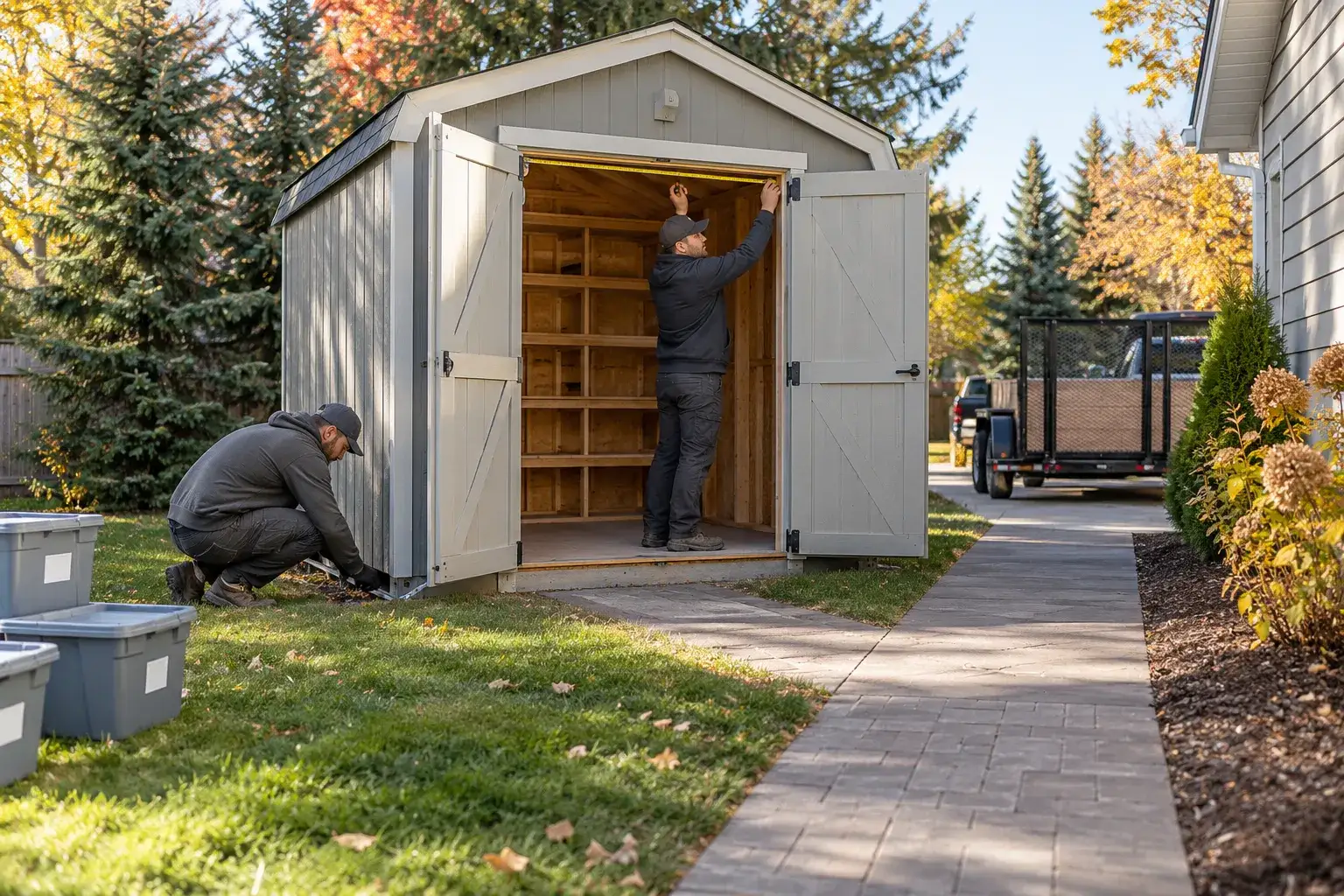
Emptying the shed first makes the structure visible. It also prevents personal property, fuels, chemicals, and tools from being mixed into a demolition estimate. Work one shelf at a time and keep a clear aisle to the door.
Use four destinations for the contents
- Keep and move to a protected location.
- Give away or sell if the item is usable.
- Dispose through the correct household program.
- Ask the remover to quote separately if the item can be accepted.
Set aside gasoline, oil, pesticides, paint, propane cylinders, batteries, and electronics. Do not place them in a mixed shed-debris pile. Check the current county or municipal program for each item.
Measure the shed and the exit
Record exterior length, width, and approximate wall height. Add the door width and height, gate width, side-yard width, carry distance, steps, slope, and tight turns. Photograph each measurement so the number has context.
Leave fixed parts in place for the quote
Do not remove structural braces, wall panels, or anchors to make access look easier. Mark shelves or fixtures you want to keep. The person pricing the work needs to see what is attached and how the remaining structure is supported.
A clean, measured shed gives the estimator a better basis for separating contents, structure, hauling, and base removal.
Use the service page to frame your request
The storage shed removal page lists inclusions, exclusions, preparation, and estimate factors. Then use the estimate checklist before calling.