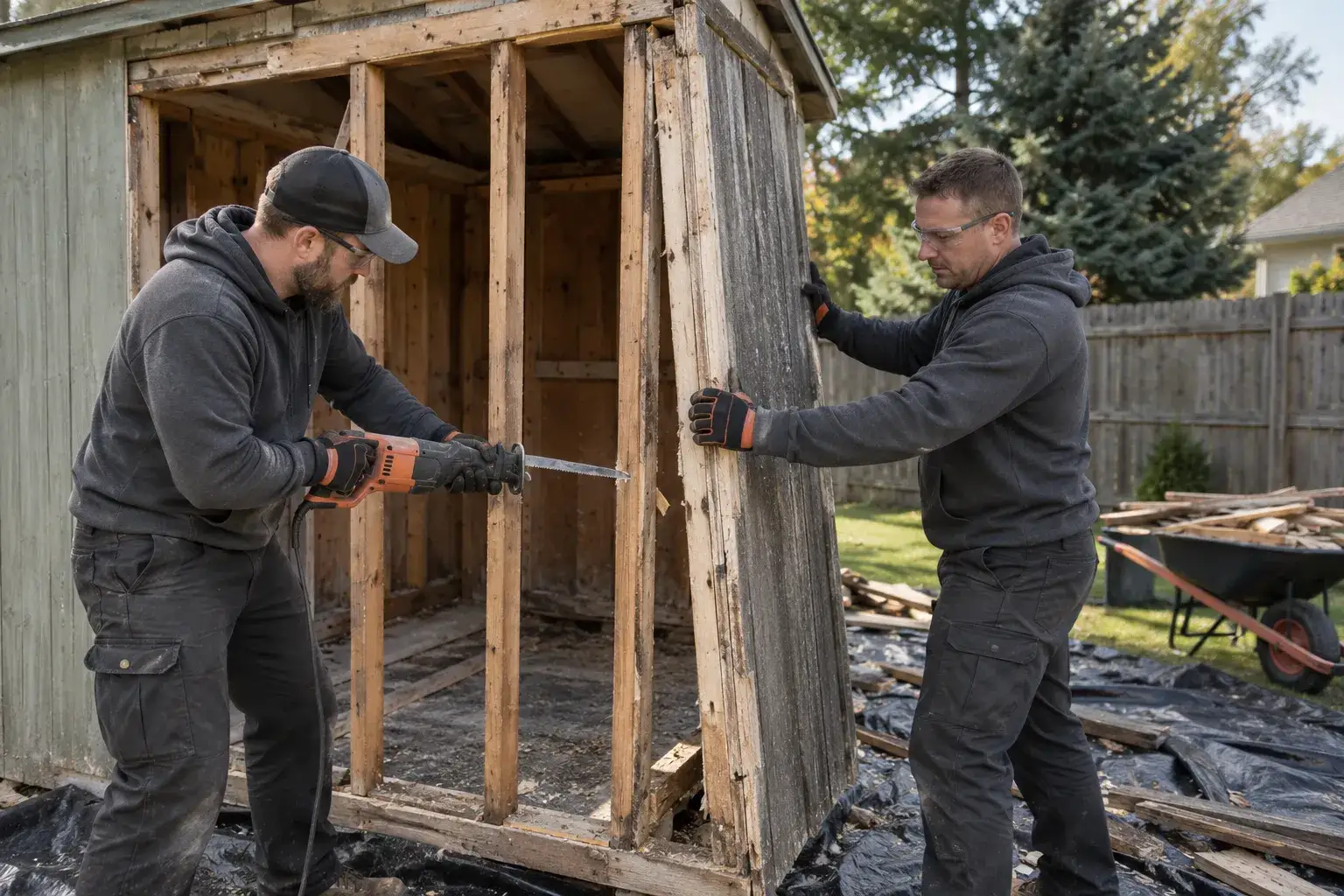
There is no single permit answer for every shed in northeast Wisconsin. The property’s municipality decides local building and razing requirements, while state rules can apply to asbestos, hazardous materials, and waste handling. A shed in an unincorporated town may follow a different process from one inside a city or village.
Ask the local building office four questions
- Is a raze, demolition, or building permit required for this accessory structure?
- Does the permit depend on size, foundation, utilities, or a historic district?
- Who must apply: the property owner or contractor?
- Are inspections, utility releases, or site-restoration steps required?
Utilities change the scope
A shed with electrical service, gas, water, or communication lines needs qualified review before dismantling. Marking underground facilities through Wisconsin’s 811 system addresses excavation hazards, but it does not disconnect a private service or make a structure safe to demolish.
Old materials may need evaluation
Wisconsin DNR’s demolition guidance covers asbestos, lead, mercury devices, refrigerants, and other materials that may need trained handling or a specific disposal route. Do not cut or break a suspect product to identify it. Share photographs and any building history with the contractor or inspector.
Once those points are clear, a demolition estimate can state what the crew handles, what another trade must disconnect or test, and whether the floor or slab remains.
Use the service page to frame your request
The shed demolition page lists inclusions, exclusions, preparation, and estimate factors. Then use the estimate checklist before calling.